


Why French?
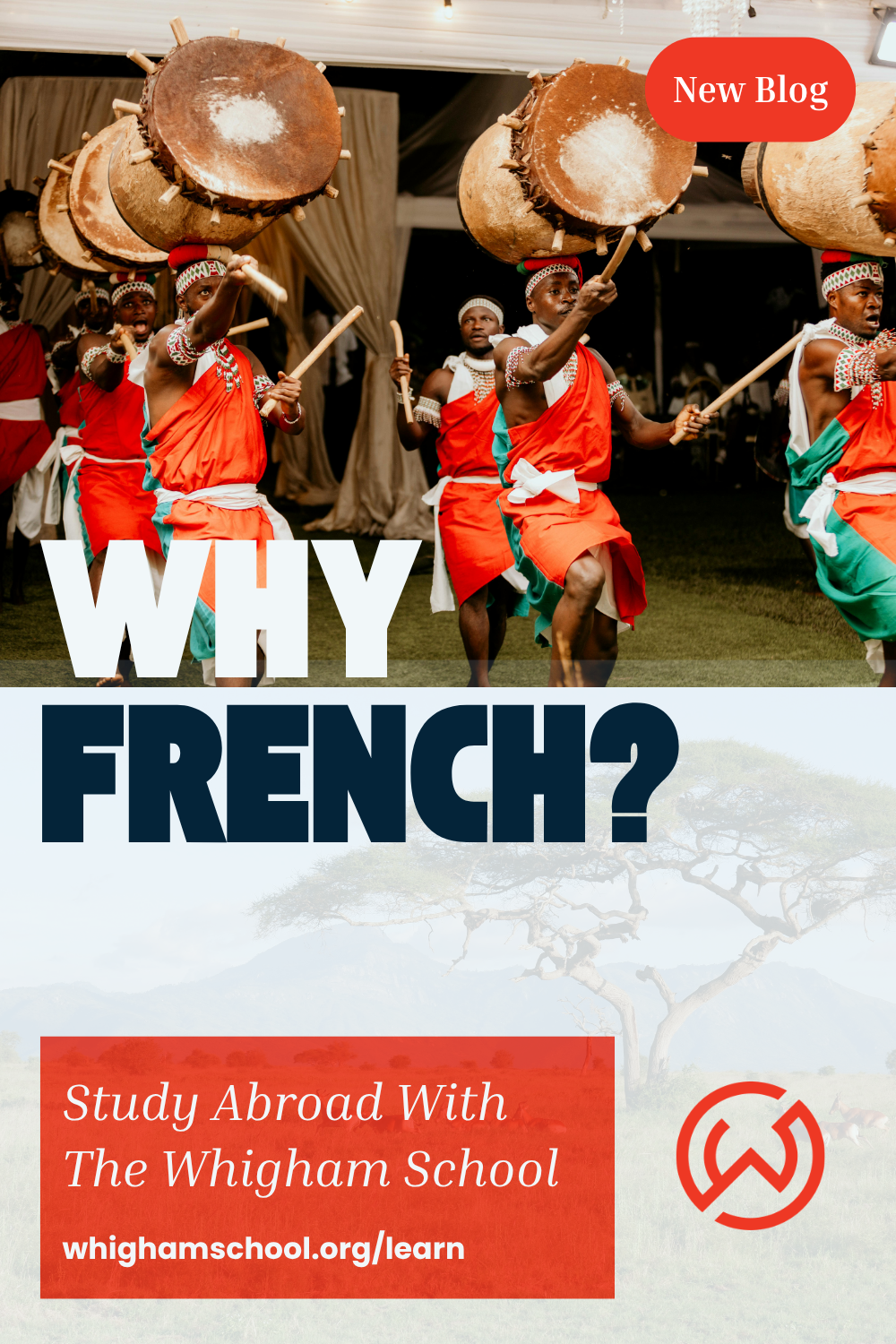
A program that teaches four languages had to pick a first one. The reasoning is more strategic and urgent than it sounds.
Most arguments for learning French are nostalgic. They invoke Paris, the fashion epicenter of the world, bal-musette music, the cafés on the Left Bank, the cultural prestige of a language that once governed European diplomacy from the Treaty of Westphalia onward. The case is romantic, and it is also incomplete. Much of it has very little to do with why French actually matters in 2026.
In March 2026, the International Organisation of la Francophonie released its latest report on the state of the language. The numbers reset the conversation. French is now spoken by 396 million people worldwide, an increase of more than 175 million in 15 years. It has moved from the fifth-most-spoken language in the world to the fourth, displacing Arabic. 65% of all French speakers now live in Africa. The same report projects 590 million speakers by 2050, with nine out of every ten new French learners being African. Other demographers, working from Sub-Saharan African population trends, project numbers as high as 750 million by mid-century, which would make French one of the three most spoken languages on Earth.
French is one of only six official languages of the United Nations and one of only two working languages of the UN Secretariat. It is a working language of the European Union, the African Union, NATO, the International Olympic Committee, the World Trade Organization, and the International Court of Justice. France is one of five permanent members of the UN Security Council. Treaties registered with the UN are translated into English and French; while English dominates UN operations in New York, French is more widely used at the UN’s second-largest office in Geneva, the institutional center of global health, refugee, labor, and trade governance. The International Organisation of la Francophonie itself is a formal network of 88 member states and governments. This is not historical residue. These are working institutions, and their share of consequential global decision-making is growing, not shrinking.
French is also, in plain economic terms, the language of the continent where the most consequential commercial story of the next thirty years is unfolding. 20 of the 29 countries where French is an official or de facto language are in Africa. The African Development Bank projects that Francophone African economies will collectively grow at rates exceeding global averages through 2030. The CFA franc monetary union, which covers 14 African countries, provides a layer of monetary stability that facilitates cross-border trade in way that anglophone African economies have not yet replicated. Côte d’Ivoire, Senegal, and Morocco are all emerging countries whose urban populations, infrastructure spending, and consumer markets are growing at rates predicted to reshape global commerce within the careers of anyone currently in graduate school.
This is why The Whigham School teaches French first.
Scholars acquire French first, during their European Studies residency, which centers on France and covers the wider European context: history, politics, economics, sociology, and religion. They reach intermediate proficiency before moving on, however, the Whigham sequence does something unique after that. French is also the only language in the program that scholars carry across two continental residencies. During the African Studies course, scholars conduct short-term residencies in Arabic, English, French, and Spanish-speaking countries, with formal language review and synthesis of Arabic, French, and Spanish woven through the curriculum. In other words, a scholar who acquired French in Lyon or Paris will use it later in Dakar, Abidjan, or Kinshasa.
The Whigham sequence traces the actual arc of the language. A scholar who learns French in Europe and uses it in Africa is trained to operate in both kinds of capitals: the institutional centers of the twentieth century and the demographic centers of the twenty-first.
On a corporate level, any organization with significant exposure to multilateral institutions (whether to Francophone African markets or global humanitarian and development work) will need leaders who can operate in French at a professional level for the foreseeable future. The current corporate playbook is to hire local representatives, use interpreters, and accept the friction. That playbook is increasingly inadequate as the share of consequential global decision-making conducted in French expands. A leader who needs an interpreter in Geneva or Abidjan is working with less information than the people across the table.
The Whigham School’s curriculum frames leadership around the idea of Global Benevolence: the discipline of doing genuine good through one’s profession, anchored in the UN’s Sustainable Development Goals. Several of these goals — poverty, health, partnerships, decent work — will be decided in Francophone Africa more than in almost any other linguistic region. A leader committed to that work who cannot operate in French is working in the wrong language.
French is one of four languages a Whigham Scholar acquires, and it is taught first for a reason. The world is moving toward French faster than most global institutions have noticed, and the consequential work of the next half-century will increasingly be done in it. The case is not aesthetic. It is strategic and urgent.
Sources:
On the global distribution and growth of French:
Observatoire de la langue française. La langue française dans le monde 2026 (6th edition). Organisation Internationale de la Francophonie, March 2026. Available at francophonie.org.
Observatoire Démographique et Statistique de l'Espace Francophone (ODSEF), Agence universitaire de la Francophonie. Demographic projections for the Francophone world, 2050.
On French in international institutions:
United Nations Department for General Assembly and Conference Management. Official languages of the United Nations. ask.un.org/faq/14463.
France, Ministry for Europe and Foreign Affairs. "International Strategy for the French Language and Multilingualism." diplomatie.gouv.fr.
Organisation Internationale de la Francophonie. Membership and organizational data. francophonie.org.
On Francophone African economic data:
African Development Bank Group. African Economic Outlook 2024. afdb.org.
Banque centrale des États de l'Afrique de l'Ouest (BCEAO) and Banque des États de l'Afrique Centrale (BEAC). CFA franc zone monetary data.
On the UN Sustainable Development Goals:
United Nations Department of Economic and Social Affairs. Sustainable Development Goals. sdgs.un.org.


